Currently Empty: ₹0.00

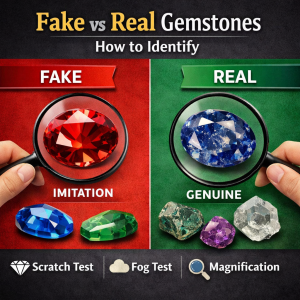
Fake vs Real Gemstones – How to Identify Them Like an Expert
Gemstones have fascinated humanity for centuries, not just for their beauty but also for their spiritual and astrological significance. However, with the rising demand for precious stones, the market is flooded with imitations and synthetic alternatives. Knowing how to distinguish fake gemstones from real ones is essential before making any purchase.
Why It Matters to Identify Real Gemstones
Real gemstones are believed to carry natural energy and healing properties, especially in astrology. Fake or synthetic stones may look identical but lack the same value—both spiritually and financially. This makes identification crucial for buyers, collectors, and spiritual seekers alike.
Key Differences Between Fake and Real Gemstones
1. Visual Appearance
Real gemstones usually have natural imperfections, tiny inclusions, or irregularities. Fake stones often appear too perfect, with flawless clarity and uniform color.
2. Weight and Density
Authentic gemstones tend to feel heavier due to their natural density. Fake stones, especially glass or plastic imitations, feel lighter.
3. Temperature Test
Real gemstones feel cool to the touch even in warm environments, while fake ones quickly adapt to room temperature.
4. Scratch Resistance
Most natural gemstones are harder and resistant to scratches. For example, diamonds can scratch glass easily, whereas fake stones cannot.
5. Light Reflection
Genuine gemstones reflect light in a unique way depending on their composition. Fake stones often show dull or overly shiny reflections that look artificial.
6. Price Check
If a deal seems too good to be true, it probably is. Real gemstones rarely come at extremely low prices unless they are of low quality.
Simple At-Home Tests
- Fog Test: Breathe on the gemstone. A real stone clears quickly, while a fake one stays foggy longer.
- Magnification: Use a magnifying glass to look for inclusions.
- Water Test: Drop the stone in water. Real stones typically sink due to higher density.
Professional Verification
While home tests are helpful, consulting a certified gemologist or astrologer ensures accurate identification. Professional tools like refractometers and microscopes can confirm authenticity.
Common Fake Gemstones in the Market
- Glass imitations of diamonds
- Synthetic sapphires and rubies
- Dyed quartz sold as precious stones
Being aware of these common fakes can help you stay cautious during purchases.
Final Thoughts
Identifying real gemstones requires a mix of observation, basic testing, and sometimes expert guidance. Whether you’re buying for jewelry or astrological purposes, always ensure authenticity to receive the true benefits of the gemstone.
Contact Info
📞 +971 50 751 1883
📧 contact@bestastrologeruae.com
📍 UAE
#gemstones #realgemstones #fakegemstones #gemstoneidentification #astrologygemstones #preciousstones #gemstonetips #gemstoneguide #naturalstones #gemstonelovers